From Loss to Legacy: How GFI and Tufts Are Turning SciFi Foods’ Cell Lines into a Public Good for the Cultivated Meat Industry

When cultivated meat startup SciFi Foods shut its doors in mid-2024, it seemed like another casualty of a tightening investment cycle that has swept through the alternative protein sector. Yet what could have been the quiet end of a promising scientific journey has instead become a new beginning for the entire field. Thanks to a bold move by the Good Food Institute (GFI) and the Tufts University Center for Cellular Agriculture (TUCCA), the company’s most valuable assets, its bovine cell lines and serum-free growth media, will now be made publicly available to researchers around the world.
The deal, finalized last August following SciFi’s liquidation, sees GFI acquire eight cell lines and two growth media formulations, which have since been transferred to Tufts for validation and storage. While the financial terms remain undisclosed, the implications are enormous. For the first time, suspension-adapted bovine cell lines, the kind that can grow in scalable bioreactor systems without needing to attach to surfaces, will be accessible to academia and, later, to startups and commercial players.
The Rise and Fall of SciFi Foods
Founded in 2019, the Bay Area startup had once been a symbol of cultivated meat’s early promise. With over $40 million in funding and a 16,000-square-foot pilot facility, SciFi Foods had developed a hybrid burger made from 90% soy protein and 10% cultivated beef. Its team successfully submitted the product to the U.S. FDA for review and had plans for market entry by 2025. But as capital dried up and investor confidence in the sector waned, even a technically successful company couldn’t outrun the market’s headwinds. By June 2024, SciFi Foods was out of funds and out of time.
Still, its technology was too valuable to vanish into storage. “We didn’t know who else might show up for the auction,” recalls Meera Zassenhaus, communications director at TUCCA. “But we collectively agreed it would be a shame for SciFi’s technology to get locked in a box somewhere.” GFI stepped in and placed the winning bid, ensuring the research, years and millions of dollars in development—could live on.
Turning Private IP into Public Infrastructure
GFI’s decision wasn’t simply opportunistic; it was philosophical. The non-profit, long known for advocating open access in alternative protein R&D, saw an opportunity to create a shared resource that could save the field years of work and tens of millions in development costs.
Developing robust cell lines from scratch, especially ones adapted to suspension culture and serum-free media, is notoriously expensive, often requiring $2 to $10 million and several years of iterative experimentation. By contrast, SciFi’s cell lines are ready to use and already optimized for growth at scale. “By making these cell lines and media broadly accessible, researchers and companies have a new starting line, one that’s now closer to the finish line of bringing new products to market,” says Dr. Amanda Hildebrand, GFI’s vice president of science and technology.
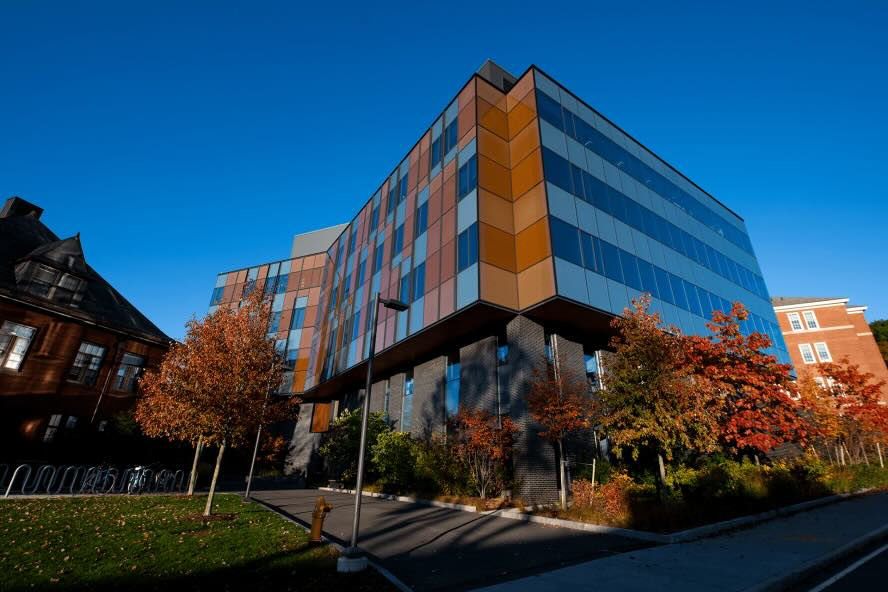
Under the partnership, the materials will be hosted within Tufts’ upcoming future foods innovation hub, home to the Cellular Agriculture Commercialization Lab. The facility will maintain the cell bank, oversee distribution, and provide incubator space for startups conducting prototype or scale-up research. Initially, access will be granted to academic institutions, with commercial licensing to follow once the infrastructure is in place.
A Technical Leap for Cultivated Meat
What makes these particular cell lines so significant is their suspension-adapted nature—they can grow freely in solution, making them ideal for large-scale bioreactors. “That allows for simple, large-scale production,” explains Dr. Andrew Stout, assistant professor of biomedical engineering at Tufts and one of the scientists leading the cell bank initiative. “They’re the first such livestock-based cell lines broadly available to the field.”
Two of the cell lines were further engineered to remove antibiotic resistance markers used in early R&D stages, ensuring they are suitable for food applications. Others retain CRISPR-based modifications that enable them to replicate indefinitely, a property that makes them particularly attractive for cultivated meat developers seeking scalability and consistency.
For startups and researchers alike, the implications are vast. Instead of each lab building its own proprietary lines from scratch, the open-access bank offers a shared foundation for experimentation and collaboration, accelerating innovation across the entire ecosystem. “So many experiments currently take place in small-scale systems,” notes Stout. “Shared, scalable, and serum-free systems could cause a real leap in the value and applicability of research.”
Composting IP: A Model for Climate Tech
Beyond its technical and financial benefits, the initiative embodies a new way of thinking about innovation in climate and food tech. As Zassenhaus puts it, “We are essentially composting intellectual property from an individual startup and transforming it into a public good.” It’s a fitting metaphor: the remains of one company’s work becoming fertile ground for future breakthroughs.
Tufts’ Cellular Agriculture Commercialization Lab is already raising funds to expand its portfolio, adding pork and mackerel cell lines and creating an ecosystem where startups can co-locate, prototype, and scale up without prohibitive costs. Researchers can now register for early access to the SCiFi cell lines, while the serum-free media formulations are already available online.
A Win-Win-Win Moment
For an industry still searching for its commercial footing, this is a moment of cautious optimism. The past two years have seen consolidation, closures, and retrenchment, from Aleph Farms’ delayed expansion to the recent Gourmey-Vital Meat merger in France. Yet even as companies stumble, the science continues to advance, and now, that progress is being shared.
“This type of open-access jumpstart invites more people to the field, gives everyone a better starting position, and ultimately can produce more winners,” says Hildebrand. “Companies get more products to market, and consumers have more choices for foods they love.”
In a sector defined by bold visions but limited runway, the GFI-Tufts collaboration offers something rare: a common platform for collective progress. It’s a reminder that the future of food may not only depend on the success of individual startups, but on how effectively their knowledge can be shared—turning failure into foundation, and competition into collaboration.


Comments